Which Pottery Rib Should You Use: Wood, Rubber, Metal or Profile?
· Updated · 3 min read
A rib is a flat piece of wood, rubber or metal that you press against clay. That sounds too simple to need a buying guide, but the material and the shape of the edge change what the rib does, and the wrong one fights you.
What a rib does
Four jobs: compress the clay (stronger, less likely to crack), shape the profile of a pot, smooth the surface, and remove slip, the wet clay slurry left by throwing.
Which rib for which job
- Compressing the floor of a thrown pot: soft rubber.
- Straightening a cylinder wall: wooden, straight edge.
- Shaping a bowl curve: wooden or firm rubber, curved edge.
- Removing slip after throwing: wooden or metal.
- Refining a leather-hard profile: metal kidney or scraper.
- Smoothing handbuilt seams and slabs: rubber first, then metal for a crisp finish.
- Matching rims, beads or feet across a set: profile rib.
Wooden ribs
Wood is firm and slightly absorbent, so it grips wet clay and moves it. This is the classic throwing rib. Press it against the outside of a spinning pot while your other hand supports the inside, and it straightens walls, defines curves and lifts away slip. Curved edge for bowls and bellies, straight for cylinders, pointed tip for the base of a pot. It also compresses slabs.
The 5 piece wooden rib and modeling knife set gives you curved, straight and pointed edges in one go. Browse wooden pottery ribs.
Rubber and silicone ribs
Soft rubber flexes to follow a curve. It’s what you use to compress the floor of a thrown pot, which helps prevent the S-shaped cracks that form there. It also leaves leather-hard clay smooth and polished with no tool marks, and it’s good for smoothing joins in handbuilding. Softer ribs suit wet clay and smoothing, firmer ones suit shaping.
The 4 piece soft rubber rib set covers kidney, crescent and straight shapes. Browse rubber and silicone ribs.
Metal ribs and scrapers
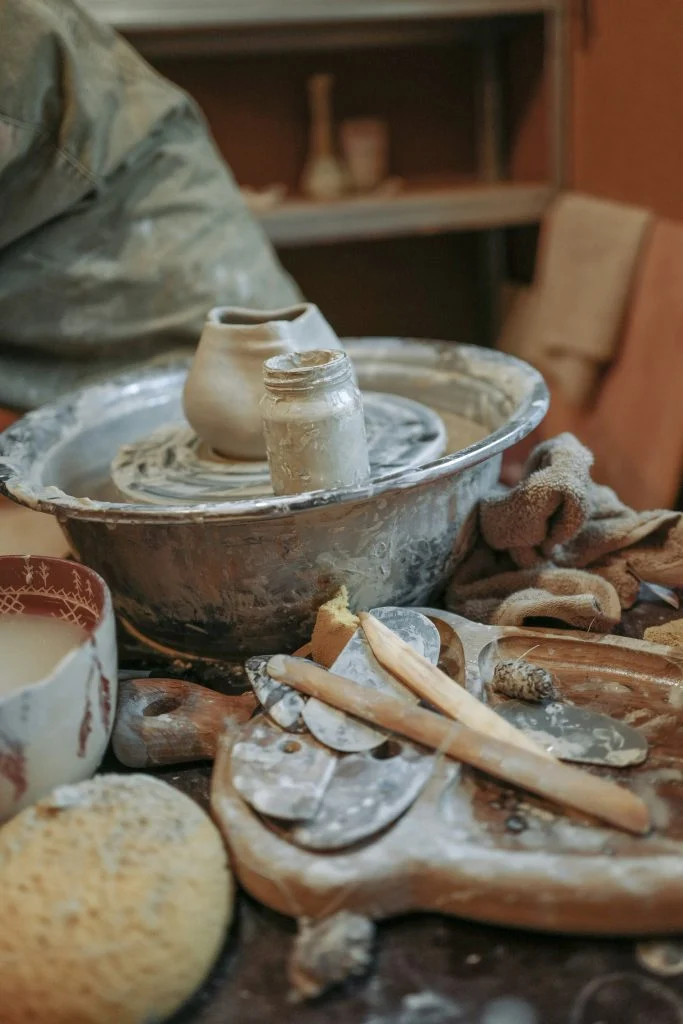
Thin stainless steel ribs, often called kidneys or scrapers, flex a little and have a crisp edge. On leather-hard clay they scrape off high spots, refine a profile and smooth the surface. Serrated ones leave texture and help even out handbuilt walls before you smooth them. Dry them after use so they don’t rust.
A set like the 10 metal pottery ribs mixes smooth and serrated edges, and a multi-edge trimming scraper handles leather-hard cleanup.
Profile ribs
A profile rib has a shape cut into its edge, like a rim, a bead or a foot. Held against a spinning pot it reproduces that exact profile every time, which makes it the easiest way to get matching mugs or bowls. They’re also popular for shaping feet when trimming. Try the profile rib for trimming and refining curves, or browse metal and profile ribs.
Ribs we recommend
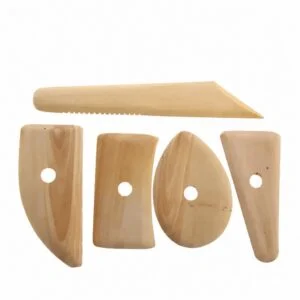
Use it for: Curved, straight and pointed wooden edges in one set
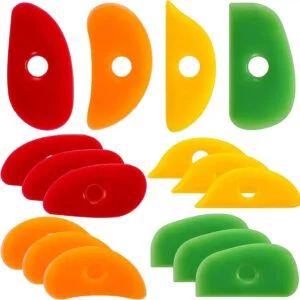
Use it for: Compressing floors and smoothing without marks
Holding a rib on the wheel
- Support the wall from the inside with your fingers, at the same height as the rib.
- Hold the rib lightly against the outside, angled so its trailing edge (the one the clay moves away from) does the work.
- Move both hands up together, slowly, with the wheel at medium speed. Let the rib glide. Pressing hard pushes the pot off center.
- Finish with one light upward pass to lift off slip.
Where to start
One wooden rib with a curved edge, one soft rubber rib, and one metal kidney. Add profile ribs when you start making sets or want a particular rim or foot. Plenty of potters end up with a drawer of ribs, one for each job. The rest of a starter kit is in the pottery tools beginners actually need.
Looking after them
Rinse after use and let wooden ribs dry flat. Don’t leave them soaking. Dry metal ones so they don’t rust, and keep rubber ones out of direct heat so they stay flexible.
Questions potters ask
What is a pottery rib used for?
Held against clay, a rib compresses it, shapes a profile, smooths the surface and lifts away slip. On the wheel that means straightening and shaping walls. In handbuilding it means compressing and smoothing slabs and seams.
Should I buy a wooden or a rubber rib first?
One of each, if you can, since they do different jobs. If you have to pick one, wheel beginners get the most from a soft rubber rib, because compressing the floor prevents the cracks that ruin a lot of first pots.
What is a kidney rib?
A rib named for its rounded, kidney-like shape. Thin steel kidneys refine and smooth leather-hard clay, and soft rubber ones compress and polish. The curve fits both the inside and outside of rounded forms.
Can I use pottery ribs for handbuilding?
Yes. They compress slabs so they warp less, smooth joins, even out coil walls and refine curves. A serrated metal rib levels a lumpy coil pot before a smooth rib finishes it.
How do I stop wooden ribs from cracking?
Rinse them, wipe off the water and let them dry flat at room temperature. Don't leave them soaking or drying in direct heat. An occasional light coat of mineral oil keeps the wood from drying out.